


Hemp without THC
Hemp and cannabis: one and the same?
Cannabis and hemp: is it the same plant?
Absolutely: hemp and cannabis are the same plant. Cannabis sativa L. is a species of the genus Cannabis. It belongs to the Cannabaceae family, in which we also find hops. Just like tomatoes, there are different varieties! People have been growing this plant for thousands of years and it has contributed greatly to human evolution. Industrial hemp, for example, is a subspecies grown for its seeds or its fibre. It contains virtually no THC — the psychotropic substance that makes you high — because Canadian regulations cap it at 0.3%, and the seed, the part we eat, carries next to none. Most of the time, the term hemp is used to refer to industrial hemp and the word cannabis identifies cannabis for medical or recreational use.
What parts of the plant are used?
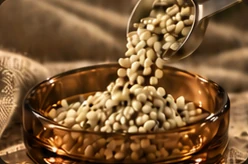
Hemp seed, also known as hempseed, is eaten as it is or cold pressed to extract its precious oil. It is used for food, body care, and hygiene of both humans and animals.
Hemp fibre has thousands of uses: textiles and clothing, paper, biofuel, rope, construction, insulation, pet litter, and more! It can easily replace petroleum and cotton used in many products. As early as 1941, Henry Ford unveiled a car whose body panels were made of a plant-based plastic — hemp among the ingredients!
Is hemp addictive?
Hemp, whether it is consumed as oil, seeds, or protein, is not addictive at all! You can enjoy it without any worries. Cheers to the happy prospect of developing an attractive and healthy temptation which is only beneficial for your health!
Is hemp oil different from cannabis oil?
Yes, and the difference is as much regulatory as it is botanical. Cannabis oil is extracted from the whole plant and contains cannabinoids, THC among them: it falls under the Cannabis Act. It is obtained either for medical purposes, on presentation of a document signed by a healthcare practitioner, or for non-medical purposes, from an authorized retailer — in Québec, the SQDC. Hemp oil, on the other hand, is a food, and also serves as the base for body care products. It is pressed from the seeds of industrial hemp, which carry virtually no cannabinoids. That is precisely why you will find one at the grocery store and not the other.
Do I need a doctor's prescription to use hemp?
Hemp is a food product, not a medical product, and can be used freely, without any recommendation...except for that of making it part of your optimal diet. Hemp seeds, oil, and protein powder alone are a prescription for better health.
Hemp without THC
What is THC?
THC, or Δ-9-tetrahydrocannabinol, is one of the many active substances, or cannabinoids, found in hemp and cannabis. More than a hundred of them have been identified in the plant, in proportions that vary widely from one variety to the next. THC is the one responsible for the euphoric effect: it acts directly on the mind, the effect lasts a few hours, and it acts differently from one person to the next depending on the dose consumed and the quality of the product. It is the active substance sought in medical cannabis, obtained on presentation of a document signed by a healthcare practitioner, and in non-medical cannabis, which has been legal and regulated in Canada since the Cannabis Act came into force on 17 October 2018 — in Québec, at the SQDC, from the age of 21. Its effects on inflammation and on the immune system are also the subject of research, but that research has so far produced no authorized health claim, and we will make none.
Does hemp contain THC?
Industrially grown hemp meets in every respect the standards set by the Canadian government. Grown for its seeds or its fibre, it carries an infinitesimally low level of THC: the Industrial Hemp Regulations set the limit at 0.3%, measured in the flowering heads, leaves and branches. The seed itself carries next to none — and the seed is what goes into our products.
How can I be sure that hemp contains no THC?
Hemp varieties are tested in the laboratory, from samples taken in the fields themselves, against very high standards. These laboratories are responsible for the rigorous control of the raw material used in hemp products, and they also test the processed products. You can therefore be confident that you are consuming a high-quality product, compliant with the regulatory THC limit and free of pathogens and harmful pollutants.
Can hemp affect a drug test?
Drug tests, which an employer may sometimes request, are very unlikely to detect a THC level as minute as less than 0.3%. What is more, the quantities of hemp eaten, even large ones, could not reach a THC level high enough to be detected. According to Health Canada, cannabis seeds do not, in theory, contain any detectable amount of THC. As a precaution, you may mention during the test that you consume hemp. Some people choose to stop eating hemp in the days leading up to a test, but nothing to date shows that it can affect the result.
Can I carry hemp in my luggage when I travel?
When travelling in Québec or elsewhere in Canada, you can carry hemp without any problem, entirely legally. If you are travelling outside the country, however, you must make sure that this food is allowed across the border, as many foods are prohibited at customs. Check with the relevant authorities before planning your trip.
Hemp and cannabinoids
What are cannabinoids?
Cannabinoids are active substances present in hemp and cannabis. More than a hundred have been identified to date. If they remain imperfectly understood by the scientific world, it is for want of in-depth studies: research only truly became possible after legalization lifted the regulatory obstacles. Some are already far better documented than others — cannabidiol, or CBD, among them. This active substance has no psychotropic effect. In Canada it nonetheless remains governed by the Cannabis Act, whatever plant it is drawn from: it is sold only through the channels that Act authorizes, and it is approved neither for children nor for animals. Our products, which are made from the seed, contain none.
What are the effects of cannabidiol on the body?
CBD is the most studied cannabinoid to date, and the most promising. Published work looks in particular at inflammation, pain, anxiety, convulsions, nausea, blood sugar and blood pressure; several results are encouraging, and the research continues. Two things are often confused, however, and they should not be: a line of research is not a treatment. Outside the cannabinoid-based medicines authorized by Health Canada, which are prescribed, no therapeutic claim is permitted in Canada. Saying that the science is advancing is accurate; saying that CBD treats a disease is not, and we will not write it.
What is the endocannabinoid system?
Our body has its own network of receptors, called CB1 and CB2, spread throughout the organism but above all in the central nervous system and in the immune system. Those are the locks. The keys that match them, the body makes itself: they are the endocannabinoids. Together — the receptors, the endocannabinoids, and the enzymes that produce and then break them down — they form the endocannabinoid system.
This system works through communication between cells: endocannabinoids send signals to the cells, which are then relayed, for example, to the body's glands, asking them either to increase or to reduce their activity. It thus takes part in regulating appetite, sleep, pain, mood and the immune response. The cannabinoids in the plant, for their part, resemble those keys closely enough to fit the same locks — and that is where their effect comes from.
How do cannabinoids act on the body?
By binding to the CB1 and CB2 receptors, the cannabinoids in the plant influence the signals those receptors transmit. These signals are involved in various physical processes, in particular the perception of pain, sleep, appetite and the inflammatory response, as well as in several systems, including the nervous, digestive and immune systems. Cannabinoids can therefore modify the information sent to the cells — which is why they are studied in fields as far apart from one another as these.
Where are cannabinoids found?
Cannabinoids concentrate in the resin secreted by tiny glands, the trichomes, which cover above all the flowering heads and the leaves of Cannabis sativa. The stalks carry very few, and the seed practically none — which is precisely why hemp seed oil, the one we eat, is not a source of cannabinoids.
Is it permitted to use cannabinoids in Canada?
Yes, within a regulated framework — and that framework has changed. Until 2018, an industrial hemp grower had to destroy the flowering heads and leaves of the crop, or return them to the field. Since the Cannabis Act came into force, the grower may sell them to a holder of a processing licence issued by Health Canada, who extracts the cannabinoids from them. Research, for its part, remains subject to a licence: scientists must still obtain one before they can study these substances.
How can cannabinoids be used?
Being able to use the entirety of the hemp plants grown, rather than destroying part of them, puts an end to an enormous waste: that is what the regulations have allowed since 2018. The cannabinoids recovered this way now feed both research and the products sold through authorized channels. Making use of the whole plant is also what makes hemp farming more viable for farms here at home.